

Imagine waking up every day carrying an invisible weight, a burden that subtly but persistently impacts every aspect of your life.
This is the daily reality for many LGBTQ+ individuals who experience minority stress, a concept crucial to understanding the unique pressures faced by sexual and gender minorities.
Here’s what we’ll explore:
- The Origins and Theory of Minority Stress
- Impacts on Mental and Physical Health
- Resilience and Coping Mechanisms
- Support Systems and Resources
Let’s dive deeper into understanding these experiences and discuss how we can all contribute to a more inclusive and supportive environment.

What Is Minority Stress
Minority stress refers to the chronically high levels of stress faced by members of stigmatized minority groups. It is not merely the direct result of individual events; rather, it stems from a complex mix of social, economic, and cultural pressures that are omnipresent yet often invisible.
This stress is particularly pronounced among individuals who navigate the world as part of the LGBTQ+ community, where discrimination, prejudice, and the fight for acceptance play a significant role in shaping their daily experiences.
Using Minority Stress Theory to Better Understand Panic and Anxiety
The minority stress model, introduced by psychologist Ilan Meyer in his groundbreaking 2003 study, offers a crucial lens through which to understand the unique pressures faced by sexual and gender minorities.
This model goes beyond individual experiences of discrimination and prejudice, framing these experiences within broader social and cultural contexts.
According to Meyer’s findings published in the Journal of Health and Social Behavior, minority stress is not only about the internal experiences and reactions to stigma but also involves the external societal structures that perpetuate discrimination.
The Deep Roots of Minority Stress
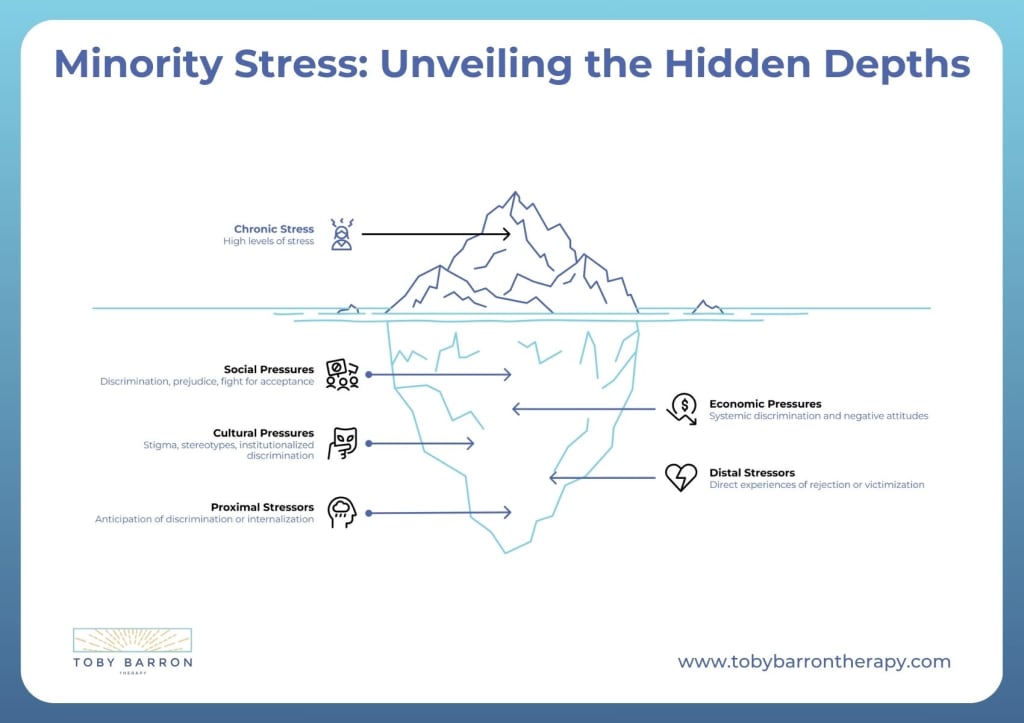
Minority stress is deeply embedded in the very fabric of our social environment. It encompasses both “distal” stressors, such as direct experiences of rejection or victimization, and “proximal” stressors, which involve the anticipation of discrimination or the internalization of negative societal attitudes.
This dual framework helps explain why minority stress is pervasive and persistent across different social settings and time periods.
For example, studies consistently show that LGBTQ individuals face higher levels of stress compared to their heterosexual counterparts, largely due to these layered minority stressors.
These experiences significantly contribute to adverse mental health outcomes, including elevated rates of depressive symptoms and anxiety.
A Gentle Place to Start
Download our free LGBTQIA+ Mental Health Toolkit—a supportive resource to help you check in with your mental health, explore your identity, and care for yourself without pressure or judgment.
Cultural and Social Dimensions of Minority Stress
It’s important to recognize that minority stress is not just a result of individual acts of prejudice or discrimination. Broader societal attitudes and the social climate also shape it.
The prevalence of stigma, stereotypes, and institutionalized discrimination creates an environment that perpetuates minority stress at a systemic level.
The impact of these stressors is profound. The International Journal of Behavioral Medicine reports that the chronic nature of such stress can lead to significant physical health disparities, including higher risks for cardiovascular diseases and other chronic conditions.
These findings underscore the importance of addressing not only the psychological but also the physical repercussions of minority stress.
What is an example of minority stress?
One example of minority stress is the ongoing expectations of rejection someone may feel because of their sexual orientation and gender or other minority identity. This kind of social stress, including internalized stigma, is a key part of minority stress and mental health research.
Psychological Impact of Minority Stressors on LGBTQ+ Individuals
The effects of minority stressors on the mental health of LGBTQ+ individuals are profound and pervasive, influencing various aspects of psychological well-being.
This stress, rooted in societal discrimination and personal prejudice, manifests in numerous mental health challenges that disproportionately affect this community:
Increased Mental Disorders
According to the American Journal of Public Health, LGBTQ+ individuals experiencing minority stress are significantly more likely to suffer from anxiety, depression, and other psychological disorders than their heterosexual peers.
The prevalence of depressive symptoms among LGBTQ+ individuals is approximately 1.5 to 2.5 times higher than among heterosexual individuals, as highlighted by research from the Anxiety & Depression Association of America.

Chronic Stress and Mental Health
Chronic exposure to minority stressors, such as discrimination, victimization, and the internalization of stigma, can lead to long-lasting psychological effects.
Heightened Risk of Suicide
According to a study published in PLOS, heightened minority stress levels are associated with an increased risk of suicide among sexual minority populations, particularly among transgender youth and young adults.
Intersectionality and Compound Stress
Intersectional identities compound minority stress. For instance, LGBTQ+ people of color may face both racial and sexual orientation discrimination, intensifying mental health disparities.
This complex interplay of factors underscores the importance of recognizing and addressing the specific mental health needs of LGBTQ+ individuals.
Who is affected by minority stress?
Minority stress can affect anyone who belongs to a marginalized group. That includes LGBTQ+ people, people of color, disabled individuals, religious minorities, and others who may face stigma, exclusion, or discrimination because of who they are.
Coping Mechanisms and Resilience in the LGBTQ+ Community
Navigating the complexities of minority stress requires both resilience and resourcefulness, particularly within the LGBTQ+ community, which faces unique challenges and adversities.
Members of this community often employ a variety of coping mechanisms that range from adaptive to maladaptive, shaping their experiences and health outcomes.
Community Support and Solidarity
One of the most significant sources of resilience for LGBTQ+ individuals is the strength found in community support. Engaging with LGBTQ+ support groups provides emotional reassurance and practical advice, which can buffer the effects of minority stress.
Affirmative Therapy
Many seek therapy from professionals who are trained to address the specific issues faced by sexual and gender minorities. Affirmative therapy not only helps individuals deal with discrimination and rejection but also promotes a positive self-concept and identity integration.
Art and Expression
Artistic activities such as writing, painting, or performing allow individuals to express feelings and experiences that might be difficult to articulate otherwise. This form of expression can lead to significant psychological relief and is often highlighted in therapeutic settings.
Maladaptive Coping Mechanisms
While some strategies positively impact mental health, others can be detrimental. Maladaptive coping mechanisms, such as substance abuse or withdrawal from social interactions, are frequently noted among those struggling with severe minority stress. These strategies may provide short-term relief from pain but ultimately exacerbate stress and isolation.

Building Resilience: Beyond Coping
The resilience observed in the LGBTQ+ community doesn’t just stem from individual coping strategies but also from the collective strength and advocacy that challenge societal norms and push for systemic change. Here’s how resilience manifests:
Advocacy and Activism
Many find empowerment in activism, which not only helps counteract feelings of helplessness but also fosters a sense of agency and community. Activism can lead to improved health outcomes by reducing the stigma and discrimination that contribute to minority stress.
Education and Awareness
By increasing awareness and promoting education about LGBTQ+ issues, communities can reduce ignorance and prejudice, which are often at the root of many stressors. Educational initiatives can empower individuals and allies to stand up against discrimination and support systemic changes.
What are the effects of minority stress on mental and physical health?
Minority stress can contribute to anxiety, depression, irritability, shame, and emotional exhaustion. Over time, it can also affect the body, showing up as poor sleep, headaches, muscle tension, fatigue, and feeling constantly stressed or on edge.
Peer Mentoring
Relationships with peers who share similar experiences can be incredibly supportive. Mentorship among LGBTQ+ individuals has been shown to reduce feelings of isolation and increase resilience by providing models of positive coping and adaptation.
The journey toward overcoming minority stress is both challenging and rewarding. While the adverse effects of such stress are profound, the resilience and coping mechanisms developed by the LGBTQ+ community highlight a powerful narrative of strength and survival.
As societal attitudes continue to evolve and support increases, there is hopeful anticipation for fewer mental health disparities and a more inclusive environment for all sexual and gender minorities.
Support Systems and Resources for LGBTQ+ Individuals Facing Minority Stress
The role of support networks in mitigating the effects of minority stress cannot be overstated. For LGBTQ+ individuals, the presence of understanding family members, supportive friends, and dedicated organizations can dramatically influence mental health outcomes and overall well-being.
The Crucial Role of Support Networks
- Family and Friends: LGBTQ+ individuals with supportive family systems show significantly lower levels of depression and anxiety. These support systems provide a buffer against the daily stressors of discrimination and prejudice, fostering a sense of acceptance and belonging.
- LGBTQ+ Organizations: Organizations dedicated to LGBTQ+ rights and support play a pivotal role in community health. They not only offer resources and guidance but also create safe spaces where individuals can express themselves freely and find camaraderie.
List of Resources for LGBTQ+ Individuals
To assist those experiencing minority stress, here is a curated list of resources that provide support, information, and advocacy:
- The Trevor Project: Offers crisis intervention and suicide prevention services to LGBTQ+ youth. It includes a 24/7 hotline, chat, and text services.
- GLAAD: Works to promote understanding, increase acceptance, and advance equality for the LGBTQ+ community through media advocacy.
- Human Rights Campaign (HRC): The largest national lesbian, gay, bisexual, transgender, and queer civil rights organization. HRC envisions a world where LGBTQ+ individuals are ensured of their basic equal rights.
- National Center for Transgender Equality: Advocates to change policies and society to increase understanding and acceptance of transgender people.
- Lambda Legal: A nonprofit organization that conducts legal work for civil rights and public policy advocacy on behalf of LGBTQ+ people and those with HIV/AIDS.
- PFLAG: The first and largest organization for LGBTQ+ people, their parents, families, and allies. It has over 400 chapters and 200,000 members and supporters crossing multiple generations of American families.
- LGBTQ+ Health Education Center: Provides educational programs, resources, and consultation to health care organizations with the goal of optimizing quality, cost-effective health care for lesbian, gay, bisexual, transgender, and queer (LGBTQ) people.
Importance of Accessible Mental Healthcare
The availability of mental health services that are affirming and sensitive to the needs of LGBTQ+ individuals is critical. Mental healthcare providers trained in understanding and addressing the nuances of minority stress can significantly improve the therapeutic outcomes for their clients.
Support networks are vital for the resilience and health of LGBTQ+ individuals facing the myriad challenges associated with minority stress. By leveraging the collective power of family, friends, community resources, and professional help, we can forge a path toward a more inclusive and supportive society.
Not sure where to begin with therapy?
You don’t have to figure it out alone. Let’s talk through what you’re experiencing and explore whether we’re a good fit.

You Deserve Support That Feels Safe and Affirming
I offer a safe, affirming space where you can explore how minority stress may be affecting your mental health. If you have been carrying the impact of discrimination, rejection, or shame, therapy may help you better understand your experience and start healing.
Over the years, my work with transgender individuals, bisexual people, and those dealing with the intersectionality of racial and sexual identity has taught me the immense strength inherent in the LGBTQ+ community. This experience not only enriches my practice but also constantly informs and evolves my approach to therapy.
If you are looking for support around identity, minority stress, or emotional overwhelm, I invite you to reach out. I would be glad to set up a consultation call.